15 Stainless Steel Texture Backgrounds for Modern Design
Understanding the Visual Impact of Industrial Textures
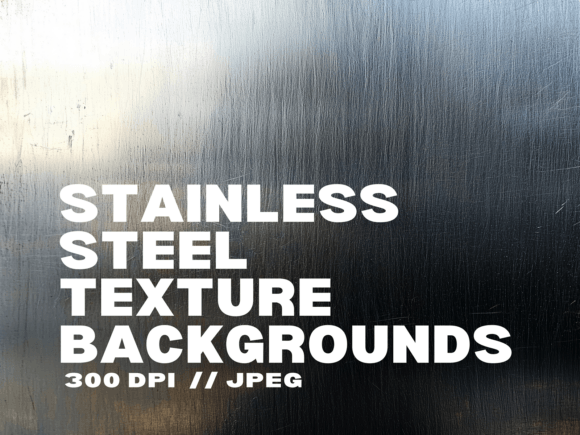
There is a specific visual language associated with modernity, precision, and durability. In the world of digital assets, few elements communicate these traits as effectively as high-quality surface treatments. The 15 Stainless Steel Texture Backgrounds collection is not merely a set of images; it is a toolkit for establishing a specific brand personality. When we look at stainless steel, we see a material that reflects light in complex ways, offering gradients from near-white highlights to deep, cool shadows. This creates a sense of depth that flat colors simply cannot achieve.
Unlike a static serif font or a whimsical script font, a texture background acts as the stage for your content. The appeal of this particular collection lies in its versatility. The surface patterns range from brushed matte finishes to mirror-like glosses. This variety allows a designer to evoke different moods. A brushed texture might feel more utilitarian and industrial, perfect for a B2B tech company. A polished, high-gloss finish, on the other hand, feels luxurious and premium, often used in automotive or jewelry branding. By utilizing these 15 Stainless Steel Texture Backgrounds, you are adding a layer of tactile realism to a digital medium, which can significantly enhance user engagement.
Strategic Applications in Branding and Marketing
When building a brand identity, consistency is key. However, consistency does not mean monotony. You need assets that can adapt to different contexts while maintaining a core visual thread. This is where these textures become invaluable design assets. Consider a startup launching a new app. They need a logo design that looks sharp on a splash screen, a website that feels professional, and social media graphics that stop the scroll.
- Logo Design and Branding: Using a steel texture as a clipping mask for typography can instantly make a sans serif font look three-dimensional. It suggests that the brand is solid and established.
- Web Design: These textures work exceptionally well for hero sections or call-to-action backgrounds. They provide enough contrast for white text while adding visual interest that a solid grey block lacks.
- Packaging Design: For physical products, particularly in the tech, automotive, or beverage industries, these textures can simulate metallic finishes on mockups, giving clients a realistic preview of the final product.
- Publishing and Editorial Design: In editorial design, such as magazine covers or report headers, steel textures can lend an air of authority and seriousness to the subject matter.
Technical Specifications and Workflow Integration
A beautiful texture is useless if it doesn't fit into your workflow. The 15 Stainless Steel Texture Backgrounds are provided as high-resolution JPG files with dimensions of 3000x4000 pixels and a resolution of 300 DPI. To the uninitiated, these numbers might just sound technical, but for a working professional, they solve specific problems.
The 300 DPI resolution is the standard for high-quality print output. This means you can use these backgrounds for physical marketing materials—brochures, business cards, or posters—without worrying about pixelation. The large pixel dimensions ensure that the texture remains crisp even when cropped for specific formats, such as a vertical Instagram story or a wide LinkedIn banner.
Furthermore, these assets are designed to be seamlessly loopable. In web design, page load times are critical. While these are high-quality images, their loopable nature means they can be tiled or extended without visible seams, offering flexibility in how you frame your content. Whether you are working in Photoshop, Canva, or Procreate, the integration is straightforward. You simply place the image and treat it as you would any other layer.
Enhancing Visual Hierarchy and Readability
One of the most common pitfalls in modern typography and graphic design is poor contrast. A designer might choose a beautiful, thin display font, only to place it on a busy background, rendering it unreadable. Stainless steel textures offer a unique solution to this problem because they possess a natural "noise" that is relatively uniform.
When using the 15 Stainless Steel Texture Backgrounds, you gain control over visual hierarchy. Because the background has depth, you can create a separation between the foreground (your text or logo) and the background. For example, applying a slight drop shadow or an outer glow to your text can make it appear as though it is floating above the steel surface. This technique is particularly effective when pairing a heavy, bold typeface with the intricate details of the metal grain.
It is important to consider the "temperature" of the steel. Cooler, blue-tinted steel works best with high-contrast white or electric blue text, creating a sleek, futuristic look. Warmer, grey-toned steel pairs well with black or charcoal typography for a more corporate, grounded aesthetic. Always test your font pairing on the actual texture to ensure the x-height and weight of your chosen typeface hold up against the complexity of the background.
Practical Tips for Selection and Licensing
Not every project requires the same finish. When selecting from the pack of 15 Stainless Steel Texture Backgrounds, look at the lighting direction. Does the light come from the top left? If your design includes a 3D object or a mockup, the lighting on the texture must match the lighting on the object to maintain realism.
Additionally, consider the grain size. A fine grain is subtle and works well for backgrounds where the text is the primary focus. A coarse, brushed grain adds more character but might compete with intricate logo details.
- Evaluate the Mood: Does the project call for "industrial grit" or "luxury polish"? Select the texture accordingly.
- Check the Licensing: These assets come with a license that covers both personal and commercial use. This is vital for entrepreneurs and small business owners who need to ensure their marketing materials are legally compliant. You can use them in client work, merchandise, and digital products without fear of copyright infringement.
- Test Scalability: Open the texture in your editor and zoom in. Because they are 3000x4000 pixels, you have room to crop in tight for specific details without losing quality.
Ultimately, the goal of using these textures is to bridge the gap between a flat digital image and a tangible experience. By incorporating the 15 Stainless Steel Texture Backgrounds